Is Egypt Safe for Tourists in 2026? Travel Advice by Region
Originally published
Last updated: 20 October 2026
Quick answer: is Egypt safe for tourists in 2026?
Egypt is not a simple yes-or-no safety decision. We mostly felt comfortable, but we recommend checking every stop and transfer against current official advice before committing to an itinerary. Our account should help you understand what to expect and feel better prepared.
The main tourist routes are treated differently from restricted border, Sinai and desert areas. Regional tensions can also disrupt flights, even when your resort or sightseeing stop is outside an area with an avoid-travel warning.
UK FCDO advice currently warns against travel to some parts of Egypt and against all but essential travel to several other areas. Those warnings do not apply equally to every tourist route, which is why region matters so much.
From our own trip, El Gouna felt the easiest and most controlled place we visited. Hurghada was certainly manageable once we adjusted. Luxor felt surprisingly easy to walk and cycle around. Aswan felt simple and local. In contrast, Cairo was by far the most intense.
The short version: Egypt may suit travellers who are prepared, flexible, and comfortable with a bit of chaos. It may not suit travellers who want an easy, friction-free holiday where every price, transfer, and interaction feels predictable.
Author note: This guide combines our historical six-week Egypt trip with official guidance checked on 20 October 2026. Our trip was not a recent safety inspection. The first-hand sections describe our personal experience only; they are not a substitute for checking official advice before you travel.
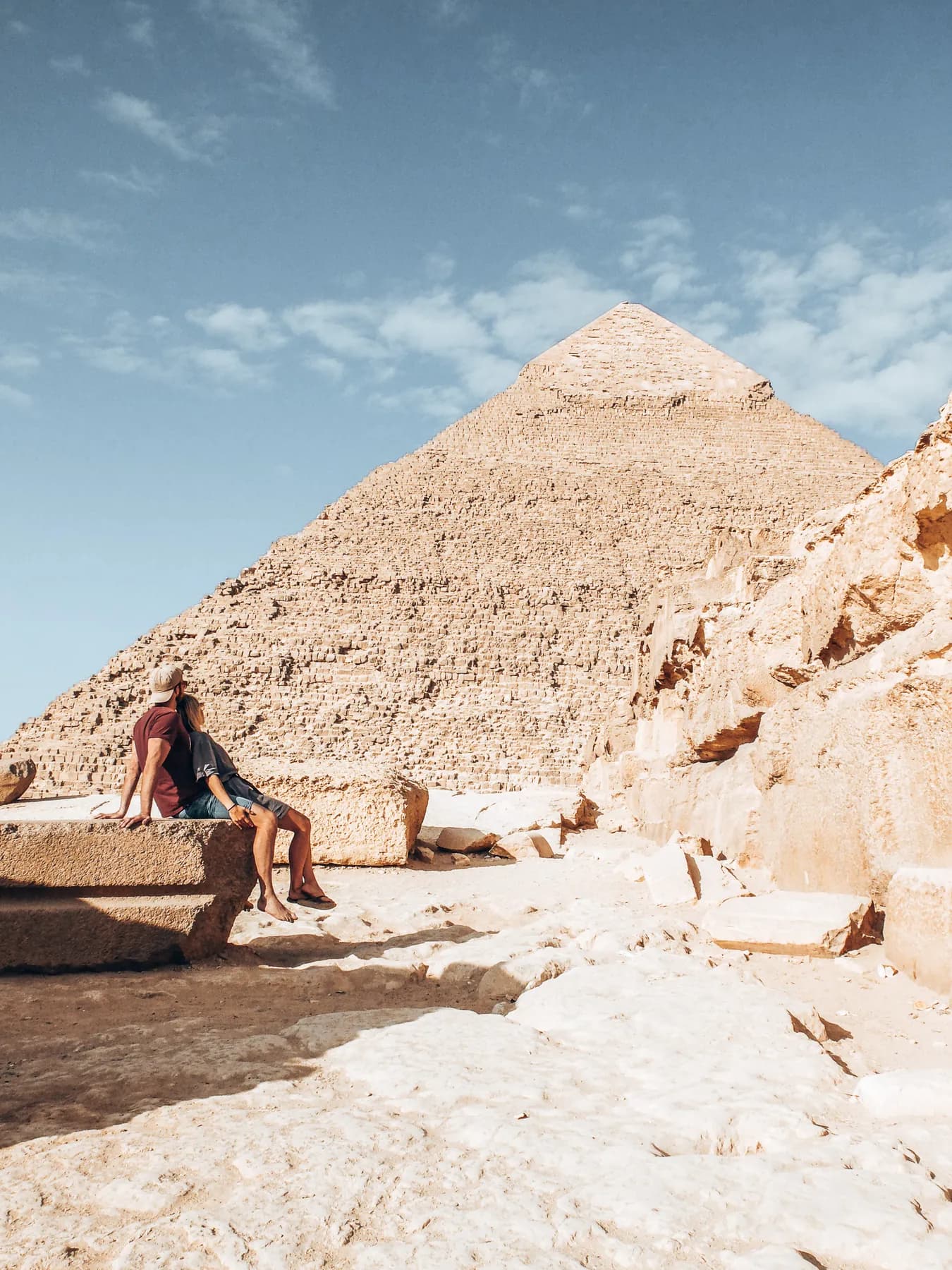
Giza during our 2018 Egypt trip.
Before you book
Start with your exact route, your government's advice and your insurance cover. A resort stay in Hurghada, a Cairo city break and a remote desert excursion each need different planning.
Our experience below explains how places felt to us. The official guidance explains the risks authorities currently identify. Read both before deciding whether the trip suits you.
Our six-week experience travelling in Egypt
This section is personal experience, not official safety advice.
We travelled around Egypt for roughly six weeks, including Hurghada, Cairo, Giza, Luxor, Aswan, and El Gouna.
The experience varied dramatically by place. That is the first thing to understand about Egypt. It does not feel like one single travel environment.
Where we felt most comfortable
El Gouna was where we felt most comfortable. We travelled there daily for remote work.
It felt secure, organised, clean and controlled. It felt very different from the rest of Egypt: more like a purpose-built resort town for wealthy travellers, with restaurants, bars, boats and yachts.
Hurghada was the next most comfortable place for us. Seeing guards with big guns when we first arrived in Hurghada was a slight shock, but we adapted quickly. Looking back after our experiences in Cairo, Hurghada felt like a walk in the park.
Hurghada was quiet during the day and buzzing at night. The marina had good food, but beach access was limited unless you were staying at a hotel. There were some public beach areas, but they did not feel ideal for us to bathe comfortably.
Luxor also felt comfortable in a different way. We felt safe walking around town and cycling between the temples of Luxor. There was still hustle, but it was less exhausting than Cairo.
Luxor had lots to see, do and eat. Touring by bicycle was one of the highlights of our trip: unique, memorable and something we would recommend to adventurous travellers based on our experience.
Aswan felt simple, with a local vibe. We stayed at a homestay, which gave us a more grounded experience than a standard tourist stay. We felt like locals, even if only for a few days.
Where we felt more alert
Cairo was the most intense place we visited. Good, but not for the faint-hearted.
It was not just one thing. It was the traffic, the crowds, the constant approaches, the pace and the feeling that you needed to be switched on all the time.
Giza was obviously amazing, but the hustling was serious. We stayed close by and arrived very early, before the tourist buses, which gave us an almost private viewing experience. That was worth it, but travellers should still be prepared for pressure around the pyramids.
One moment when we felt unsafe was in an extremely crowded local market in Cairo at night. In hindsight, we were lost in the wrong location for tourists at that time of day.
On another occasion, we were approached by an elderly gentleman who was polite, well dressed and educated. We walked together along well-lit streets, exchanging stories. We stopped for tea, and many people knew him. We were introduced to others and given gifts during what felt like an impromptu city tour.
It was a charming experience that felt authentic and genuine, until we reached a dimly lit, less populated street behind a church and were asked to hand over money. We realised the whole experience had been choreographed.
Luckily, nothing serious happened. We negotiated a “fair price” for the “impromptu tour”, explaining that we would need to return to the hotel to get the money.
Another unforgettable experience was an overnight felucca trip. Sailing up the Nile was one of the most unique experiences of the trip, but sleeping overnight with no phone reception and no clear idea where we were required complete trust in the captain.
He welcomed us into his family home, which made the experience warmer, but being so remote and uncontactable still felt sketchy at the time.
We also felt on edge for a few hours outside Aswan, around our visit to Kom Ombo Temple. The temple was incredibly well kept and quiet. The train journey afterwards was a different experience.
At the time, our options seemed to be an occasional first-class train or a local train. We felt on edge waiting at the station, where we were the only two tourists, so we jumped on the first train that arrived: a local train.
We quickly thought we had made a mistake. It was crowded, the doors were unsecured and there was nowhere to leave our luggage. We had to sit some distance from our bags and keep a watchful eye on them. People approached us selling trinkets, food and anything else they could offer.
Our panic seemed quite comical to the locals. Once we joined in with the laughter, the tension subsided, and a few people started helping us.
The toilet door was broken. Freda needed to use the bathroom, but I did not want her to go alone, and neither of us felt comfortable leaving our luggage unattended. A gentleman looked at me, pointed to our luggage, then held the toilet door shut for my wife and kept people away.
That train journey remains one of the most memorable travel experiences of my life. Nerve-racking at first, funny and humbling in the end. Six hours of authentic, modern Egyptian life.
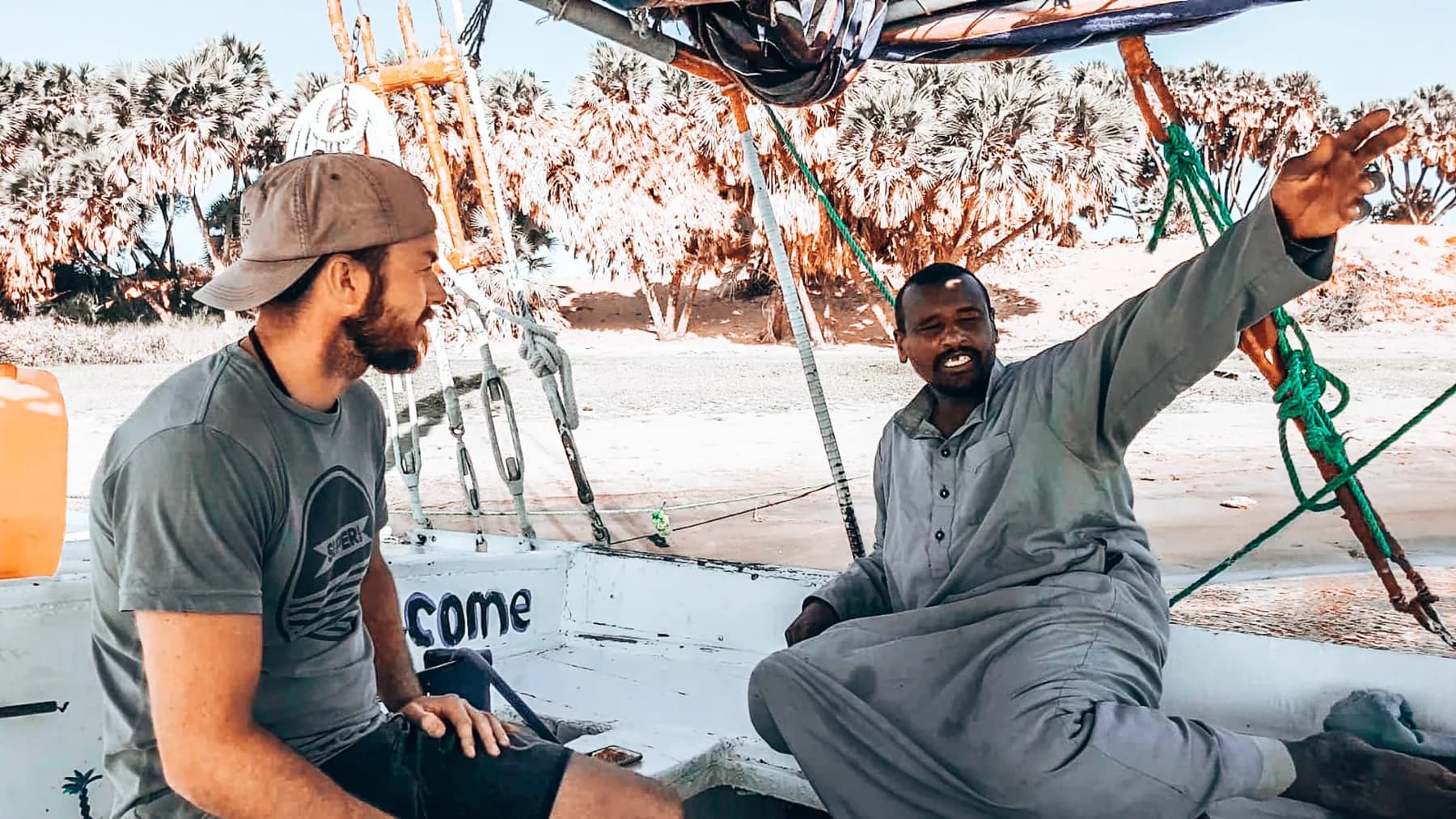
Aboard a boat during our 2018 Nile travels.
The biggest difference between Egypt and easier travel destinations
Egypt asks more of you.
You need patience. You need a sense of humour. You need to accept that some days will be messy.
Taxis were rarely honest in our experience. Ride-share was the better option where we used it, although it could still be frustrating. ATMs were widely available, but some were out of order. Cash was needed most of the time, although supermarkets accepted cards.
Our simplest advice for a first-time visitor is this:
Surrender to the chaos and Egypt can deliver experiences you will never forget.
That does not mean ignoring risk. It means arriving with realistic expectations.
Current official guidance for Egypt
This section summarises official guidance checked on 20 October 2026. Advice can change, so check your own government's latest travel advice before booking and again before departure.
For UK readers, start with FCDO's Egypt advice and regional map. Travellers from elsewhere should also check their own government's advice.
Other governments use different warning levels:
- Australia's Smartraveller advises exercising a high degree of caution in Egypt overall due to terrorism, with higher levels in some areas.
- The US Department of State advises increased caution due to terrorism, crime, and health, with "Do not travel" warnings for specific regions.
- The Government of Canada advises exercising a high degree of caution overall, with stronger warnings for some regions.
The main agreement is clear: Egypt is not one uniform risk zone. Major tourist areas, resort towns, border regions, northern Sinai, parts of South Sinai, and desert areas should not be treated as the same kind of trip.
Regional tensions and travel disruption
The FCDO warning page describes an unpredictable regional security situation and a risk of escalation. Smartraveller also warns of possible air-travel disruption. Check your airline, allow flexibility and avoid relying on an onward land-border crossing without checking current arrangements.
What UK FCDO currently warns against
UK FCDO currently advises against all travel to:
- North Sinai Governorate.
- Within 20km of the Egypt-Libya border, except El Salloum, where FCDO advises against all but essential travel.
UK FCDO currently advises against all but essential travel to several other areas, including:
- Northern South Sinai beyond the St Catherine-Nuweibaa road, except coastal areas along the west and east of the peninsula.
- Ismailiyah Governorate east of the Suez Canal.
- Areas west of the Nile Valley and Nile Delta, with named exceptions including Luxor, Qina, Aswan, Abu Simbel, the Valley of the Kings, Faiyum, Siwa, some oasis and desert areas, and specified routes.
- The Hala'ib Triangle and Bir Tawil Trapezoid.
That does not mean every Egypt trip is affected in the same way. It does mean you should match your exact itinerary to the current official map and wording before you travel.
What official advice means for tourists
Official advice is not the same as personal comfort.
A place can feel fine and still sit near a higher-risk region. A resort can feel controlled and still have transport, excursion, harassment, or insurance risks. A city can be open to tourists and still require care around demonstrations, scams, traffic, and crowded areas.
For UK travellers, FCDO also warns that travel insurance could be invalidated if you travel against FCDO advice.
Practical recommendation:
Before booking, check the official advice for every region on your itinerary. Before departure, check it again.
Passports, visas and insurance
For people travelling from the UK on a full British citizen passport, FCDO entry guidance currently requires at least six months' passport validity on arrival and a blank page. British passport holders normally need a visa.
A limited permission stamp applies to qualifying short resort stays arriving by air at Sharm El Sheikh. It is not permission for a wider Egypt itinerary. Check the exact conditions before relying on it. Other nationalities and entry routes have different requirements; use the Egyptian authorities' guidance for your passport and route.
Arrange insurance for your whole itinerary and activities, including any diving or boat excursions. Ask your insurer about exclusions for government warnings and regional disruption. Do not assume that a policy covers travel against official advice.
Country-wide safety issues to understand
These are the issues that apply broadly across Egypt, even when you are not going near a region with a specific travel warning.
Crime and personal safety
We did not experience violent crime in Egypt.
Our main personal safety issues were situational: crowded areas, unfamiliar streets, aggressive approaches, transport uncertainty, and feeling out of place in local areas where there were no other tourists.
Official sources describe a more mixed picture. UK FCDO says crime is generally low, but it also warns about sexual assault and harassment, including reports in Red Sea resorts. US and Australian advice also highlight harassment, scams, opportunistic crime, and unwanted attention towards women.
Practical recommendation:
Stay aware without becoming paranoid. Avoid wandering into unfamiliar crowded areas at night unless you know where you are going. Use reliable transport where possible. Keep valuables discreet. Be ready to leave situations that feel wrong.
Scams, touts and tourist hassle
The lesson from our Cairo experience was that an unsolicited tour can begin warmly and end with pressure to pay. Agree on the service and price before accepting help.
Official advice also warns that tourists can be targeted by scammers, touts, overcharging, and aggressive vendors, especially around tourist sites, shops, temples, and archaeological areas.
Practical recommendation:
Be polite, but keep boundaries. If someone offers an unsolicited tour, explanation, shortcut, photo spot, or "free" help, assume money may be requested later. Agree prices before accepting services.
Road, taxi and transport safety
Transport was one of the biggest practical differences between Egypt and easier travel destinations.
Taxis rarely felt honest to us. Ride-share was the way to go where we used it, although it could still be frustrating.
We used a first-class train from Luxor to Cairo, which was a great experience.
Official sources warn that road travel is a major safety issue in Egypt. UK FCDO warns that road accidents are common and advises against driving outside main cities and resorts at night. Official advice also warns about bus, rail, ferry, Nile cruise, and boat safety risks.
Our good train journey does not establish current rail safety. Official sources describe serious road and rail incidents; choose transport using current guidance rather than our historical experience alone.
Practical recommendation:
Use the most reliable transport option you can afford, especially after dark, between cities, or when carrying luggage. For taxis, agree the price before moving. Prefer reputable transfers, confirmed ride-share where available, or well-reviewed operators.
Food, water, heat and health
We had no food issues in Egypt. That is our personal experience, not medical advice or a guarantee about food safety.
Official health guidance is more cautious. Travellers should check health advice before travelling to Egypt, including routine and travel vaccines, food and water precautions, medication rules, travel insurance, and heat risk.
Check the CDC Egypt health guide for vaccine and food-and-water advice. Australian guidance recommends boiled or sealed bottled water and avoiding swimming in freshwater, including the Nile. Discuss vaccines and medication with a travel-health professional before departure.
Egypt was obviously hot. Coming from Australia, we were used to heat, but some travellers may struggle more with the climate, especially when walking around temples, cities, and exposed sites.
Practical recommendation:
Be conservative with water, heat, and hygiene. Build slower days into the itinerary, especially in Luxor, Aswan, Cairo, and any exposed archaeological sites.
Local laws, culture and behaviour
Egypt has strict laws and conservative social expectations.
Official advice warns travellers to be careful with photography, drones, alcohol, drugs, political comments, demonstrations, public affection, dress, and LGBTQ+ visibility.
Do not photograph military, police, government, or sensitive infrastructure. Avoid demonstrations and political activity. Be cautious with social media comments. Dress respectfully, especially away from resort areas and around religious sites.
Alcohol is not treated the same everywhere. Official guidance says drinking is generally limited to licensed places, private homes, and some resort settings.
Drug offences can carry severe penalties. Do not bring a drone without the required prior authorisation.
FCDO warns that LGBT+ people have been prosecuted under debauchery laws, despite same-sex activity not being explicitly criminalised. Read the full local-law and photography guidance, including restrictions on photographing people and sensitive sites, before taking equipment or planning photographs.
Practical recommendation:
When in doubt, be conservative. Egypt is not the place to test boundaries around politics, public behaviour, photography, or local law.
Region-specific safety in Egypt
Egypt should not be treated as one uniform risk category.
Our experience of El Gouna was very different from Cairo. Hurghada was different again. Luxor and Aswan had their own rhythm.
UK FCDO guidance also treats regions differently, with specific warnings for North Sinai, parts of South Sinai, parts of the Western Desert, border areas, and other listed regions.
Hurghada and the Red Sea resorts
Personal experience:
Hurghada felt manageable after the initial adjustment. It was quiet during the day and busier at night. The marina was good for food, and we felt more comfortable there than in Cairo.
Beach access was not as simple as we expected. In our experience, the better beach areas were tied to hotels, and the public options did not feel ideal for Western travellers.
Official guidance:
Red Sea resort areas are treated differently from higher-risk regions such as North Sinai and some border or desert areas. UK FCDO notes that resort areas have security measures, but official advice still warns about harassment, sexual assault reports, transport risks, excursion safety, and variable watersports standards.
Practical recommendation:
Hurghada may suit travellers who want a softer introduction to Egypt, especially if staying in a hotel or resort. Still, do not treat it as risk-free. Choose transport carefully, check excursion operators, and read current official advice before booking.
For a closer look at resort streets, transport and day-to-day comfort, read our full Hurghada safety guide.
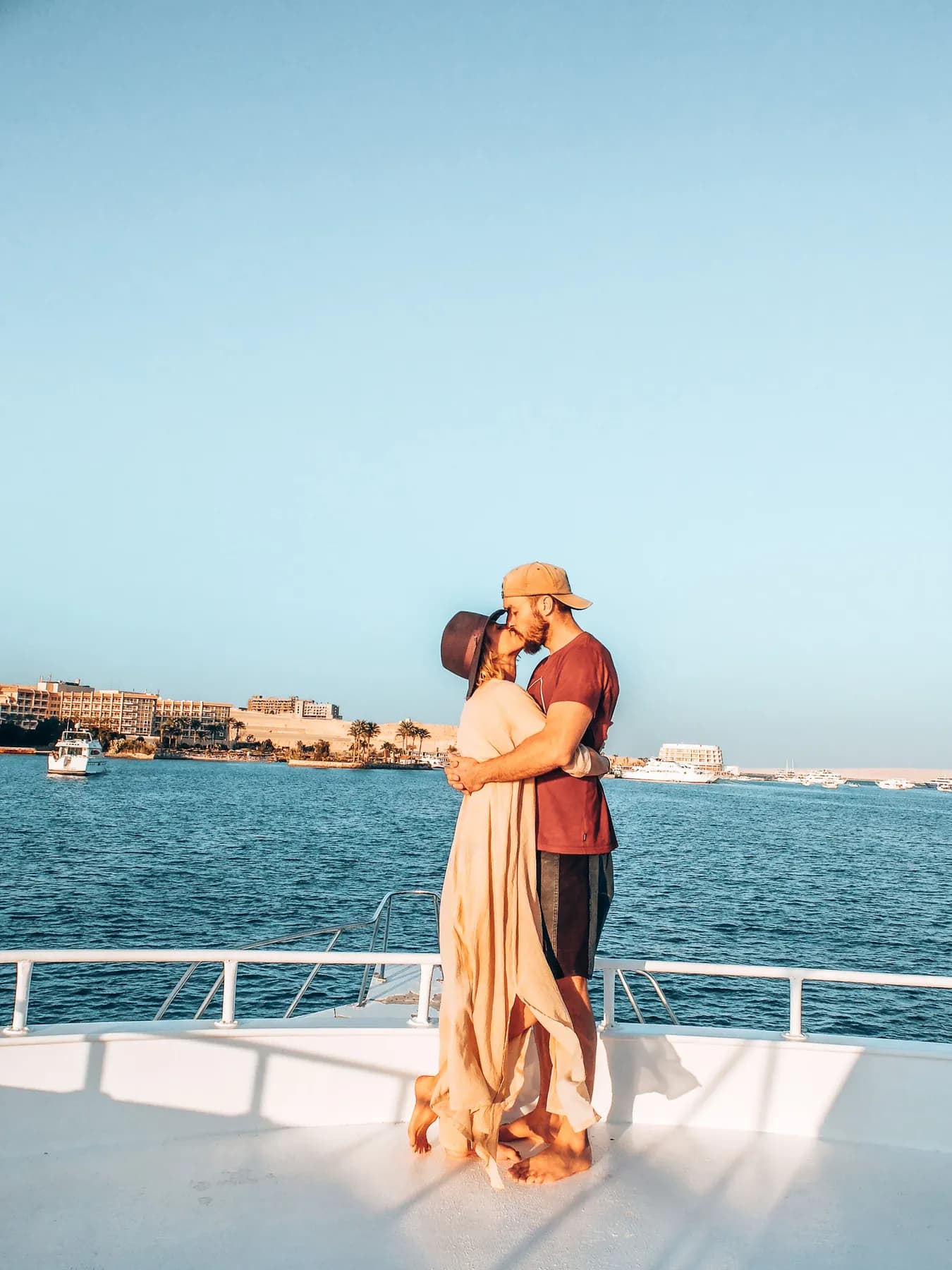
A moment on the water during our 2018 Hurghada stay.
Cairo and Giza
Official guidance:
Cairo and Giza are not automatically off-limits under the official advice checked for this article. But official sources warn about terrorism, demonstrations, road safety, scams, touts, harassment, and opportunistic crime.
Practical recommendation:
Plan Cairo more carefully than resort areas. Start early for major sights. Use reliable transport. Be ready for approaches around tourist sites. Leave crowded or confusing areas if your instincts say it is time to go.
Luxor
Personal experience:
Luxor was one of the highlights of the trip.
There was still hustle, but it felt less overwhelming than Cairo. We felt safe walking around and cycling through Luxor, and there was plenty to see, do, and eat.
Cycling was a highlight of our trip; that historical experience is not a current road-safety recommendation. Read our first-hand day in Luxor for the experience, then assess current roads, heat and your own ability.
Official guidance:
UK FCDO excludes Luxor and the Valley of the Kings from its broader Western Desert "all but essential travel" warning. That does not remove normal travel risks. Road safety, heat, guides, scams, transport negotiation, and excursion quality still matter.
Practical recommendation:
Luxor can be a strong destination for travellers who want temples, food, and a more manageable pace than Cairo. Be prepared for guides, transport negotiation, heat, and tourist-site approaches.
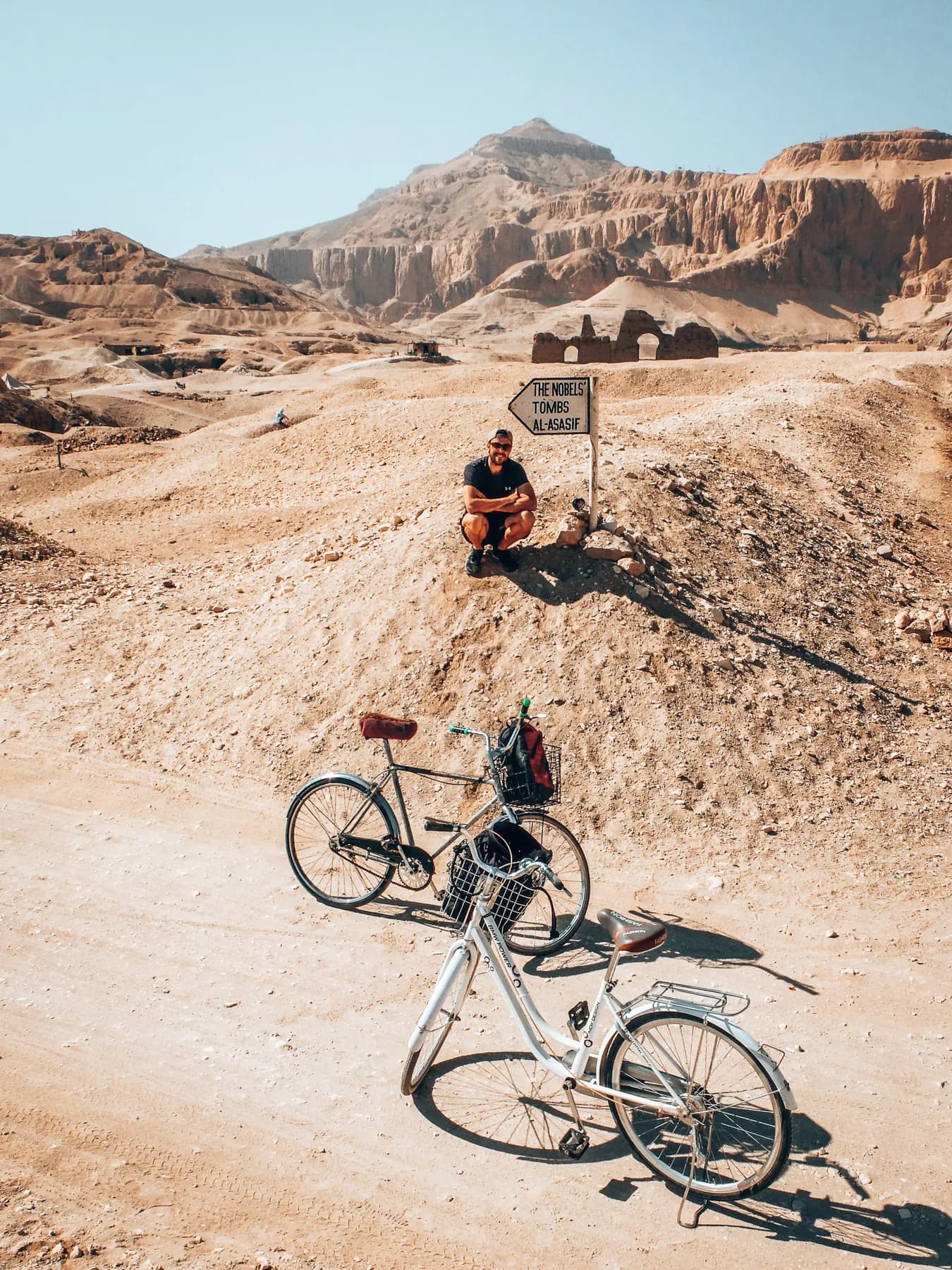
Cycling during our 2018 Luxor visit.
Aswan
Official guidance:
UK FCDO excludes Aswan and Abu Simbel from its broader Western Desert warning. Official advice still warns about transport, Nile cruise and boat risks, remote-area issues, poor communications in some places, and the need for proper planning.
Practical recommendation:
Aswan may suit travellers who want a quieter and more local experience, but river trips, remote areas, and informal arrangements need care. Know what you are booking, who is responsible, and how you will communicate.
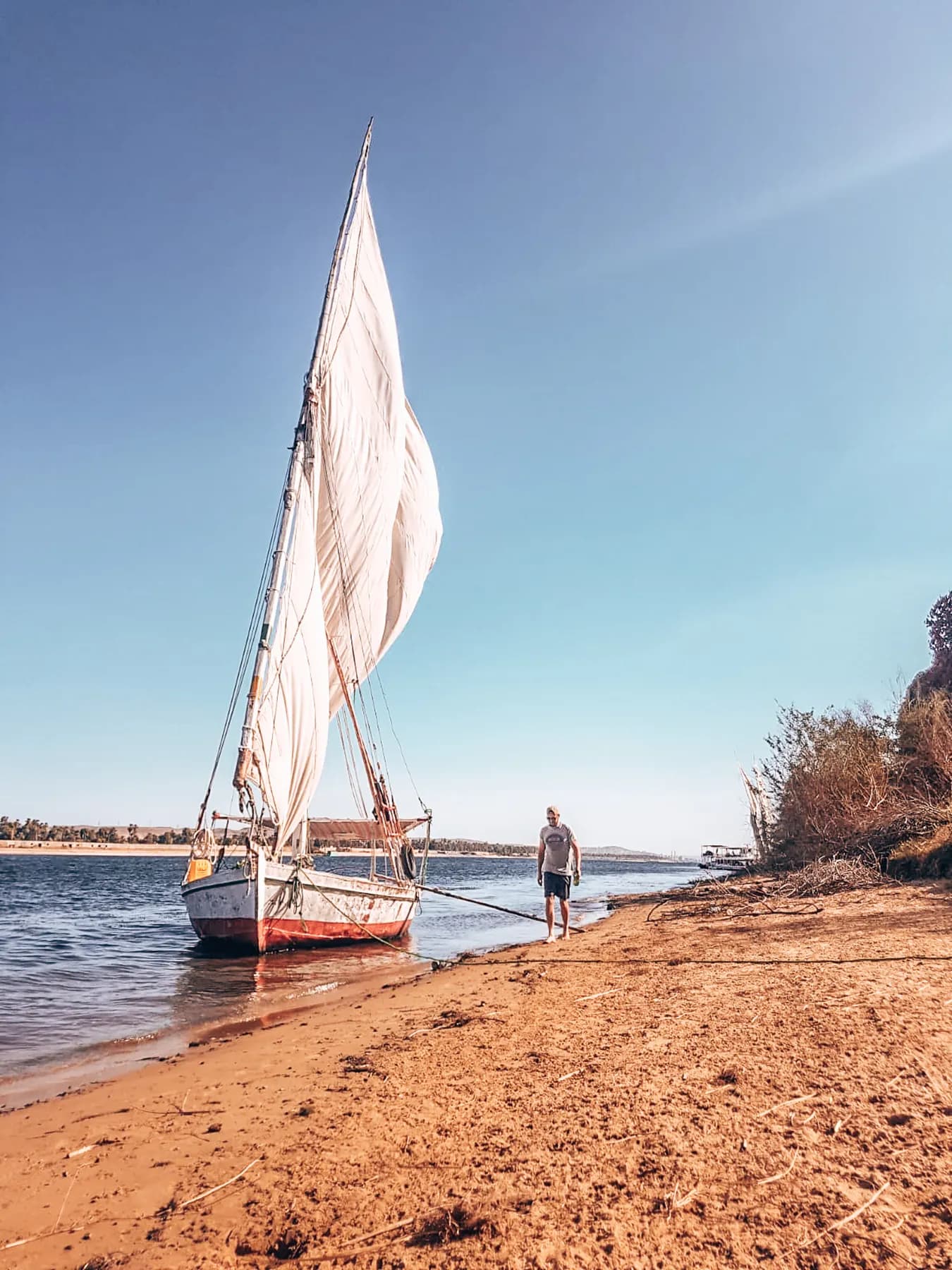
A sailboat beside the riverbank during our 2018 Nile travels.
El Gouna
Personal experience:
El Gouna felt the easiest and most controlled place we visited.
It was clean, organised, secure-feeling, and quiet compared with the rest of Egypt. It also felt more like a resort enclave for wealthy travellers than a typical Egyptian city.
There were nice restaurants and bars, plus plenty of boats and yachts.
Official guidance:
We did not find specific official guidance for El Gouna. Treat it under broader Red Sea resort and Egypt-wide advice rather than assuming it is risk-free.
Practical recommendation:
El Gouna may suit nervous travellers, couples, families, or people who want Egypt with more structure and less friction. The trade-off is that it may feel less like everyday Egypt.
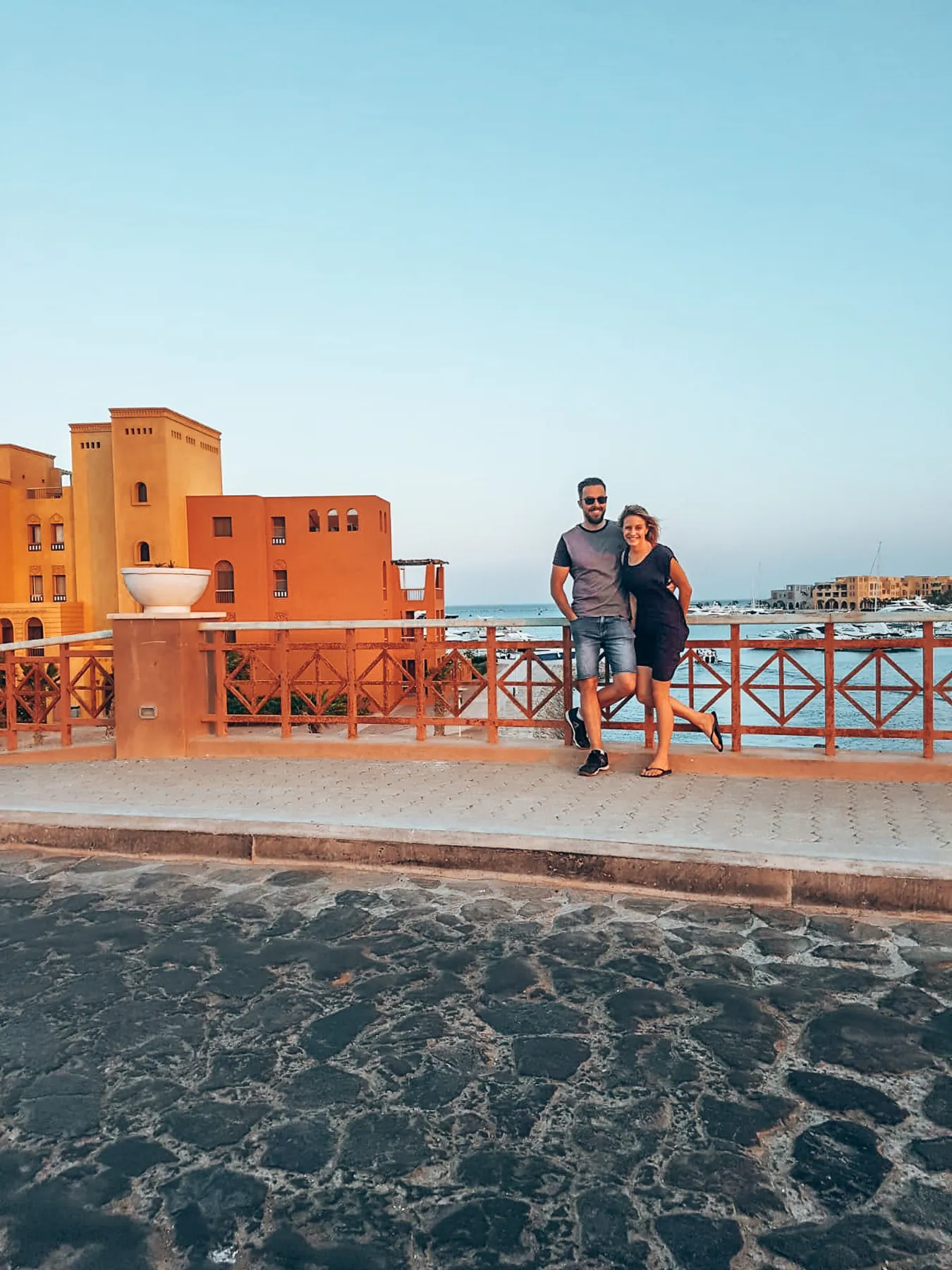
El Gouna during our 2018 Egypt trip.
Sharm El Sheikh and South Sinai
We cannot offer a first-hand account of Sharm El Sheikh.
Official guidance:
Sharm El Sheikh and South Sinai require careful region-specific wording. UK FCDO treats Red Sea tourist areas in southern Sinai differently from northern South Sinai, where it advises against all but essential travel beyond the St Catherine-Nuweibaa road, except coastal areas along the west and east of the peninsula.
Australian, US, and Canadian advice use different boundaries and warning levels, so check your own government's wording if Sharm or South Sinai is part of your trip.
Practical recommendation:
Do not assume "South Sinai" means one single risk level. Check the exact town, route, resort area, and transfer path.
Areas requiring extra caution or avoidance
Use UK FCDO as the primary structure if you are a UK reader.
At the time checked, UK FCDO advises against all travel to North Sinai Governorate and within 20km of the Egypt-Libya border, except El Salloum, where it advises against all but essential travel.
It also advises against all but essential travel to several other areas, including parts of South Sinai, Ismailiyah east of the Suez Canal, parts of the Western Desert, and the Hala'ib Triangle and Bir Tawil Trapezoid.
Non-UK readers should check their own government's advice, because Australia, the US, and Canada use different warning systems and boundaries.
Is Egypt safe for women?
Personal experience:
Our group mostly felt safe. Freda felt uncomfortable at times because of staring, but the trip did not generally feel unsafe.
That is one experience, not a universal answer.
Official guidance:
Official sources warn that women travellers may face harassment or unwelcome attention. UK FCDO advises female travellers to exercise caution alone, particularly at night and in taxis. Australian advice says foreign women can be subject to unwelcome male attention and warns about harassment by taxi drivers.
Practical recommendation:
Women travellers should not rely on a simple yes or no answer. Plan routes, transport, clothing, and accommodation carefully, especially in Cairo, around crowded areas, and when travelling at night.
Choose clothes for the setting and your comfort; clothing does not guarantee protection from harassment.
Is Egypt safe for families?
Our account does not provide enough family-specific experience to judge what travelling with children would be like.
Official guidance:
UK FCDO advises that children should not be left unaccompanied and notes reports of sexual assault involving minors. Broader transport and health guidance also supports using reputable accommodation, transfers, and tour operators.
Practical recommendation:
Families should use reputable accommodation, tours, and transfers, avoid leaving children unaccompanied, and pace travel carefully. Our comfort ranking is not evidence that an area is safer for children.
Based on our comfort levels only, El Gouna and Hurghada felt easier than Cairo for nervous first-time visitors.
Is Egypt safe for independent travellers?
Personal experience:
Independent travel in Egypt created some of our best memories, including cycling in Luxor, staying in an Aswan homestay, and taking local transport.
The trade-off was less predictability and more responsibility for our own logistics.
Official guidance:
Official sources warn about road risk, public transport and rail incidents, checkpoints, restricted border or desert travel, and permits for some off-road or desert areas.
Practical recommendation:
Independent travellers should be comfortable negotiating, changing plans, and handling uncertainty. If that sounds exhausting, use more structure: private transfers, guided tours, well-reviewed accommodation, and planned transport.
Egypt safety tips for first-time visitors
These recommendations combine personal experience and official guidance.
Check official advice before booking and before departure
Do not check once and forget it.
Government advice can change, and region-specific warnings matter.
Choose your regions carefully
Do not treat El Gouna, Hurghada, Cairo, Luxor, Aswan, Sharm El Sheikh, and restricted regions as the same kind of trip.
They are not.
Start gently if you are nervous
Based on our experience, El Gouna felt the most controlled and Hurghada felt more manageable than Cairo.
Cairo is worth visiting, but it is not the softest introduction.
Use reliable transport
Taxis rarely felt honest to us. Ride-share was better where we used it, but still not always smooth.
Uber lists services in Cairo, Alexandria and Hurghada. A city listing does not guarantee a driver for your journey.
Check availability in the app, match the driver and number plate, share your trip and keep a backup plan.
Taxi and ride-share passengers have both reported assaults; an app is not a safety guarantee.
For transfers, late arrivals, and city-to-city travel, choose reliability over saving a little money.
Agree prices before accepting help
If someone offers a guide, shortcut, tea, photo, taxi, camel ride, boat trip, or explanation, assume money may become part of the interaction.
Agree clearly or politely move on.
Keep cash, but do not rely on one ATM
We needed cash most of the time. ATMs were widely available but not always working.
Official guidance and our experience both support carrying cash. Cards are accepted in many established hotels, resorts, supermarkets, and larger shops, but cash is still important.
Do not rely on a single ATM.
Be careful with crowded local areas at night
Timing, crowd density and knowing your route matter. Plan how you will get back to your accommodation, and leave yourself an easy way out if an area feels overwhelming.
Do not over-sanitise the trip
Some of Egypt's best moments came from the messiness.
The aim is not to remove every rough edge. It is to understand which rough edges are just travel friction and which ones are genuine risk.
Frequently asked questions
Is Egypt safe right now?
As of 20 October 2026, official advice does not treat all of Egypt the same way.
UK FCDO advises against travel to some parts of Egypt and against all but essential travel to several other areas. Australia and Canada advise exercising a high degree of caution overall. The US advises increased caution overall.
Major tourist areas are not all under the same warning level, but all checked governments advise caution and warn against or discourage travel to specific regions.
Check your own government's advice before travelling.
Is Cairo safe for tourists?
Cairo and Giza are not automatically off-limits under the official advice checked for this article, but travellers should take care around traffic, demonstrations, tourist-site scams, harassment, and crowded areas.
Is it safe to visit the pyramids?
Official sources do not give a pyramid-specific warning against visiting, but they do warn about scams, touts, overcharging, and aggressive vendors around tourist and archaeological sites.
Go early, use reputable guides if needed, and keep boundaries clear.
Is Egypt safe for solo female travellers?
Solo female travellers should not rely on a simple yes or no answer.
We travelled together, so our experience cannot answer what travelling alone as a woman would be like.
Official sources warn about harassment and advise extra caution, especially at night and in taxis.
Are Egypt resorts safer than cities?
In our experience, El Gouna felt much more controlled than Cairo, and Hurghada felt easier than Cairo.
Resort areas may feel easier and are treated differently from higher-risk regions, but they are not risk-free. Official advice still warns about harassment and assault reports, excursion safety, watersports, transport, and insurance implications.
What parts of Egypt should tourists avoid?
For UK readers, start with UK FCDO advice.
At the time checked, FCDO advises against all travel to North Sinai Governorate and within 20km of the Egypt-Libya border, except El Salloum. It advises against all but essential travel to several other areas, including parts of South Sinai, Ismailiyah east of the Suez Canal, parts of the Western Desert, and the Hala'ib Triangle and Bir Tawil Trapezoid.
Other governments use different boundaries and warning systems, so check your own official advice before travelling.
Is it safe to use taxis in Egypt?
Taxis rarely felt honest in our experience.
That does not mean every taxi is unsafe, but it does mean travellers should be careful with pricing and expectations.
Australian advice says taxis in Cairo and Alexandria should use meters, but many drivers may claim meters are broken. It also warns that ride-share apps can be safer because trip details can be tracked and shared.
Uber lists services in Cairo, Alexandria and Hurghada. A city listing does not guarantee a driver for your journey.
Check availability in the app, match the driver and number plate, share your trip and keep a backup plan.
Taxi and ride-share passengers have both reported assaults; an app is not a safety guarantee.
Do you need travel insurance for Egypt?
Yes. You should have travel insurance for Egypt.
Make sure it covers every region and activity on your itinerary. UK FCDO warns that insurance could be invalidated if you travel against FCDO advice. Australian and Canadian guidance also stress checking policy exclusions.
Do not assume a policy covers restricted regions, desert travel, adventure activities, diving, boat trips, or travel against official advice.
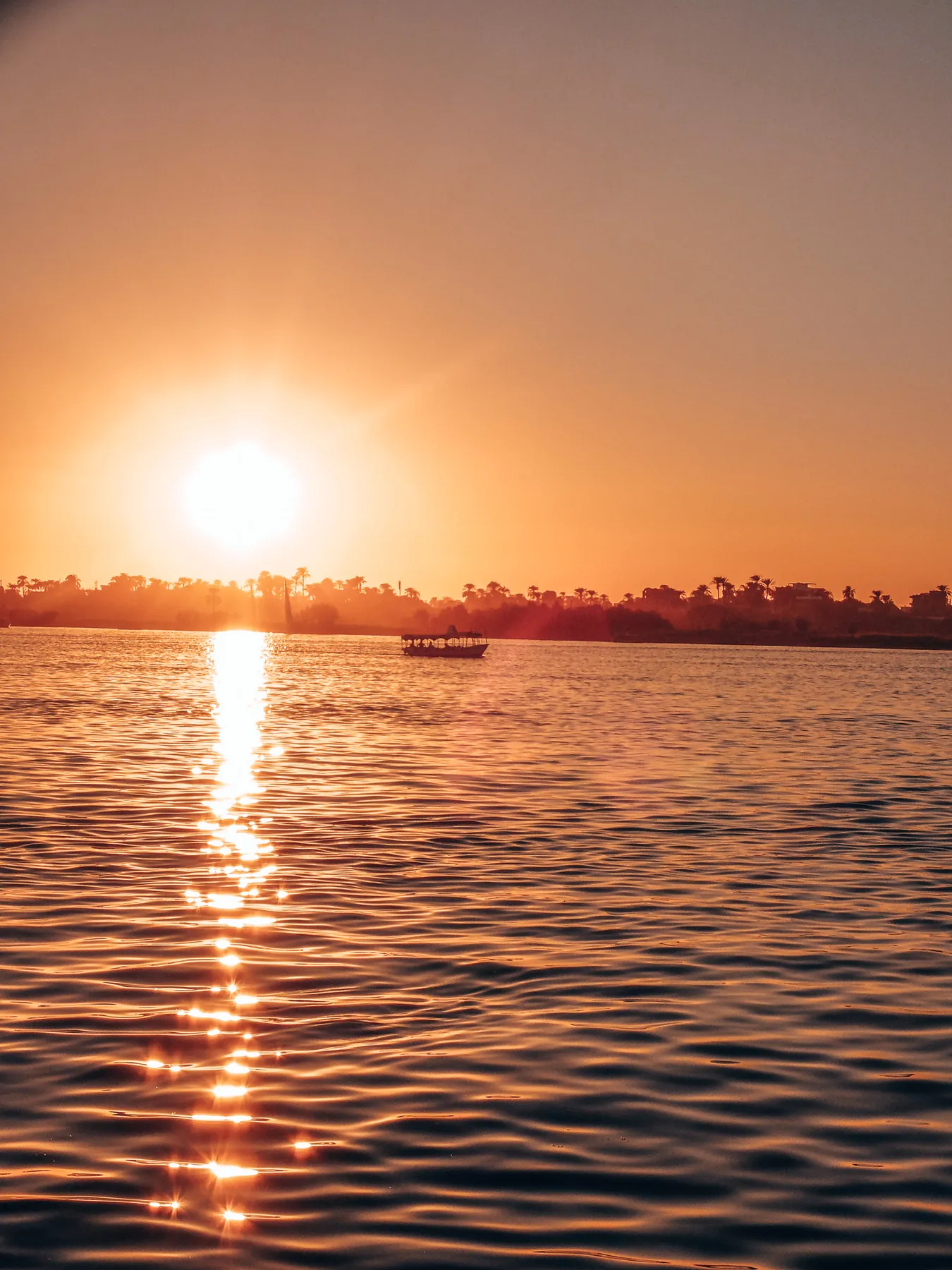
Sunset on the Nile during our 2018 trip.
Final verdict: should you visit Egypt in 2026?
Egypt can be unforgettable if you understand what kind of trip you are choosing.
If you want clean organisation, easy logistics, and a gentle introduction, places like El Gouna or Hurghada may feel more comfortable than Cairo.
If you want ancient sites, big-city intensity, Nile experiences, local trains, homestays, and stories you will still be talking about years later, Egypt can deliver that too.
But do not confuse memorable with effortless.
Egypt asks you to be alert. It asks you to negotiate, adapt, and sometimes laugh at the absurdity of the day. It rewards travellers who can surrender to the chaos without switching off their judgement.
Before you book, match your itinerary to current official advice. Before you depart, check it again.
More first-hand Egypt guides
Sources
- UK FCDO Egypt travel advice: https://www.gov.uk/foreign-travel-advice/egypt
- Australian Smartraveller Egypt advice: https://www.smartraveller.gov.au/destinations/africa/egypt
- US Department of State Egypt travel advisory: https://travel.state.gov/en/international-travel/travel-advisories/egypt.html
- Government of Canada Egypt travel advice: https://travel.gc.ca/destinations/egypt
- CDC Egypt traveller health: https://wwwnc.cdc.gov/travel/destinations/traveler/none/egypt
- Uber Cairo: https://www.uber.com/global/en/cities/cairo/
- Uber Alexandria: https://www.uber.com/global/en/cities/alexandria/
- Uber Hurghada: https://www.uber.com/global/en/r/cities/hurghada-red-sea-eg/
- FCDO entry requirements: https://www.gov.uk/foreign-travel-advice/egypt/entry-requirements
- FCDO safety and security: https://www.gov.uk/foreign-travel-advice/egypt/safety-and-security
- FCDO health: https://www.gov.uk/foreign-travel-advice/egypt/health